
Keynote speakers
Ipek Oguz, Ph.D.
Associate Professor, Department of Computer Science, Department of Electrical and Computer Engineering, Vanderbilt University, USA.
Old ideas for new models
Abstract: For decades, medical image computing has relied on carefully designed algorithms that encoded our understanding of anatomy, imaging physics, geometry, and more. Deep learning has dramatically transformed the field by replacing many of these hand-crafted approaches with end-to-end optimization, delivering remarkable performance across a wide range of tasks. But many of the assumptions that made DL so successful, such as abundant data and substantial computational resources, do not always hold in medical imaging. This talk will explore how incorporating domain knowledge into DL models can improve performance across a range of tasks, organs, and modalities. Rather than viewing data-driven learned representations and domain knowledge as competing paradigms, these results motivate a more integrated perspective in which they complement one another.
Biography: Ipek Oguz is an Associate Professor in the Department of Computer Science at Vanderbilt University, with secondary appointments in Electrical and Computer Engineering and Biomedical Engineering. She received her Ph.D. in Computer Science at the University of North Carolina at Chapel Hill. Prior to joining Vanderbilt, she worked in the Penn Image Computing and Science Laboratory (PICSL) and Center for Biomedical Image Computing and Analytics (CBICA) at the University of Pennsylvania as well as in the Iowa Institute for Biomedical Imaging (IIBI) at the University of Iowa. Her research is in the field of medical image computing and specifically in the development of novel methodology for quantitative medical image analysis, with applications to ophthalmic imaging, obstetric imaging, endoscopic imaging and neuroimaging. Her technical interests include image segmentation, image synthesis and deep learning. She has co-authored more than 200 peer-reviewed journal and conference publications. She was a founding member of the Women in MICCAI Committee, and she is an Associate Editor for Medical Image Analysis and IEEE Transactions on Medical Imaging, and an Executive Editor for the Machine Learning for Biomedical Imaging journal. She served as program chair for MIDL 2023, and as general chair for IPMI 2025.
Dean Ho, Ph.D.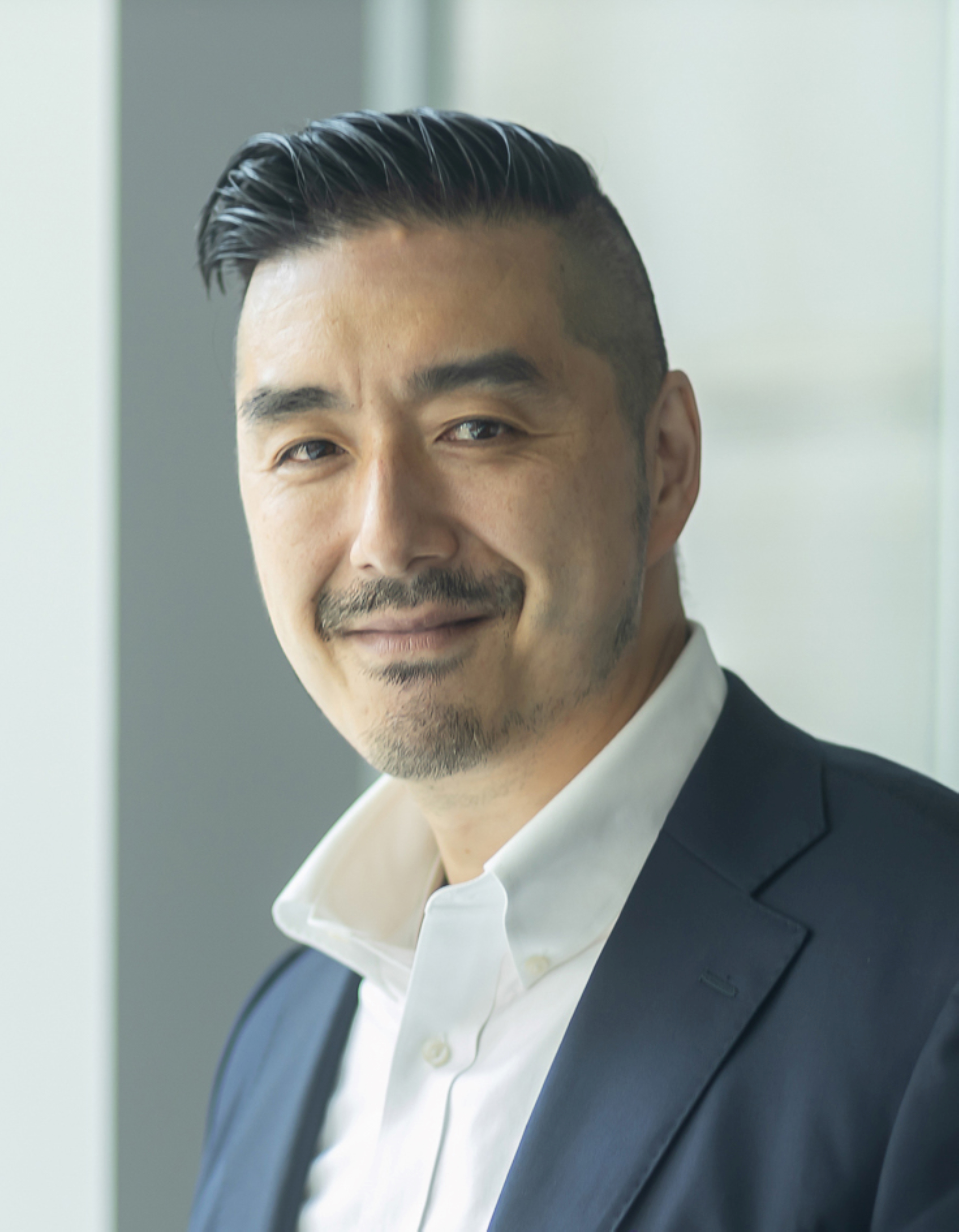
Provost’s Chair Professor, Department of Biomedical Engineering, National University of Singapore, Singapore.
Longevity is Personal
Abstract: In the DELTA Trial, Dean Ho became the test subject of an unprecedented human study exploring the intersection of AI, metabolism, and performance. DELTA led to the discovery of the GRIT biomarker, a powerful way to measure and optimise human resilience in real time, accessible to everyone.
Beyond the science of longevity, the DELTA journey revealed something deeper: that strength, adherence, gamification, and community can transform the pursuit of health into a path for overcoming limits.
Biography: Professor Dean Ho is currently Provost’s Chair Professor, Director of The Institute for Digital Medicine (WisDM) at the Yong Loo Lin School of Medicine; Director of The N.1 Institute for Health (N.1), and Head of the Department of Biomedical Engineering at the National University of Singapore (NUS).
Prof. Ho and team launched a first-in-kind trial - with Prof. Ho as the test subject - to optimise his performance and biomarkers with digital technologies. This study has been featured on television and digital media programming, and major global meetings. Prof. Ho and team also manage a portfolio of over 10 prospective, interventional human oncology clinical trials with life-saving outcomes. A serial entrepreneur, he has advised health/human performance teams, nutrition and wearable firms, and venture funds on digital medicine deployment.
Prof. Ho is an elected Fellow of the US National Academy of Inventors (NAI), American Association for the Advancement of Science (AAAS), the American Institute for Medical and Biological Engineering (AIMBE), and the Royal Society of Chemistry. Prof. Ho is Co-Chair of the World Health Organization (WHO) Working Group for the regulation of AI for Health.
Junzhou Huang, Ph.D.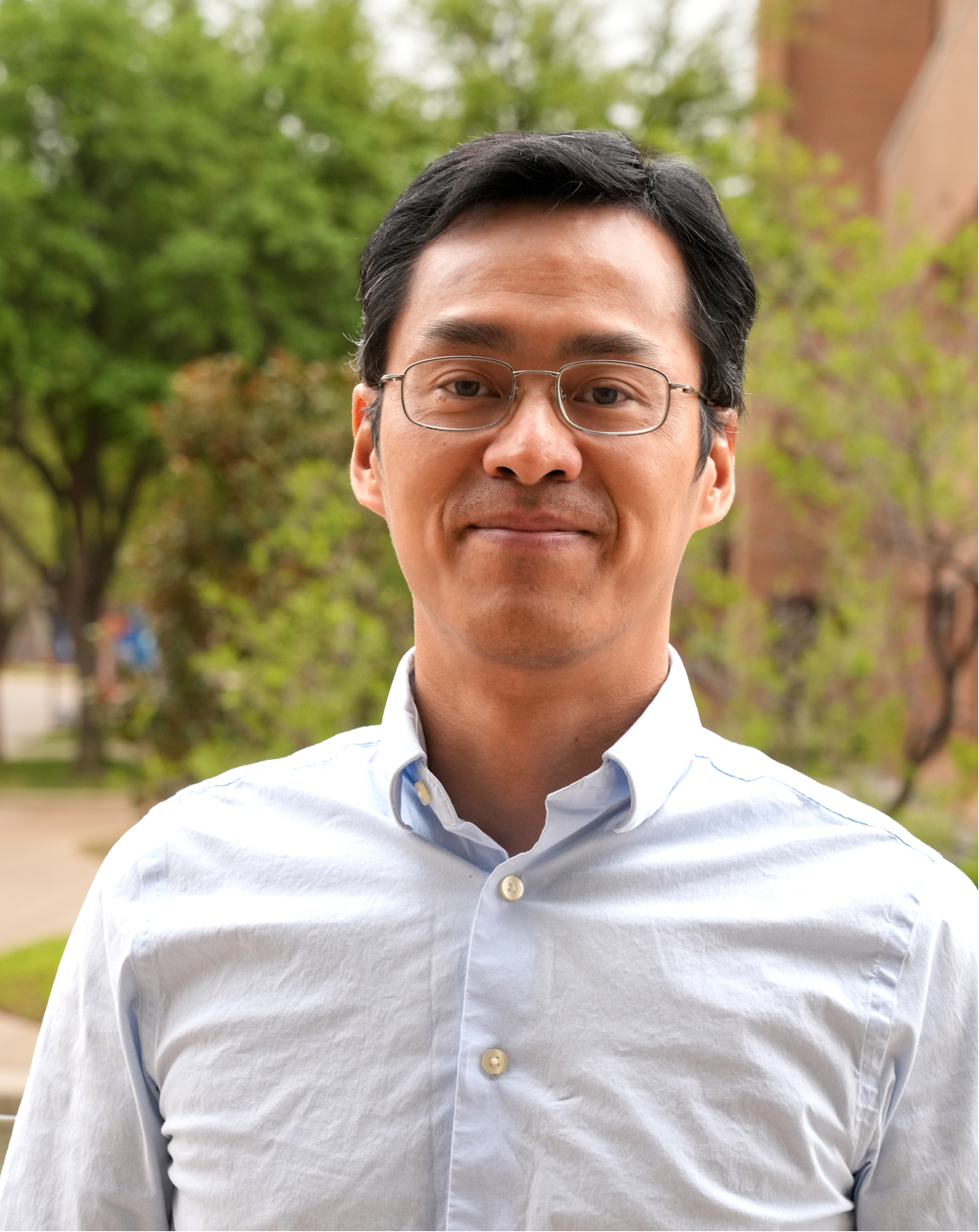
Jenkins Garrett Professor, Department of Computer Science and Engineering, University of Texas at Arlington, USA.
Multimodal Learning for Image-Omics Data: Recent Progress, Pitfalls, and Prospects
Abstract: Recent advances in high-throughput imaging and omics technologies have created unprecedented opportunities to study complex biological systems in a holistic manner. Multimodal learning has emerged as a powerful paradigm for integrating image and omics data, enabling deeper insights into cellular heterogeneity, disease mechanisms, and precision medicine.
This keynote will review recent progress in multimodal learning, data fusion strategies, and foundation models tailored to image-omics integration. At the same time, it will highlight key pitfalls, including data heterogeneity, misaligned modalities, and challenges in model interpretability and generalization. Finally, the talk will discuss future prospects, focusing on scalable architectures, self-supervised and generative approaches, and the path toward robust, clinically actionable multimodal systems.
Biography: Dr. Junzhou Huang is the Jenkins Garrett Professor in the Department of Computer Science and Engineering at the University of Texas at Arlington. He has served as a Director of the Machine Learning & Healthcare Center at Tencent AI Lab. He is an Amazon Scholar. His research interests include machine learning, medical image analysis, and bioinformatics, with a particular emphasis on developing novel machine learning methods for graph-structured data and their applications in biomedicine. His research focuses on (1) the development of scalable and interpretable machine learning algorithms for complex graph data; and (2) AI methods for extracting biologically and clinically meaningful information from multimodal pathology and pharmacology data, with applications in computational pathology, computational immunology, and computational drug discovery. His research has been supported by federal and state agencies (NSF, NIH, CPRIT) as well as industry partners (Google, Amazon, Microsoft, IBM, Samsung, XtalPi, Nokia, and Johnson & Johnson). His work has been widely published in top-tier AI, machine learning, and medical image analysis venues, and he has served in editorial and program committee roles for leading conferences and journals in the field.
Mert Sabuncu, Ph.D.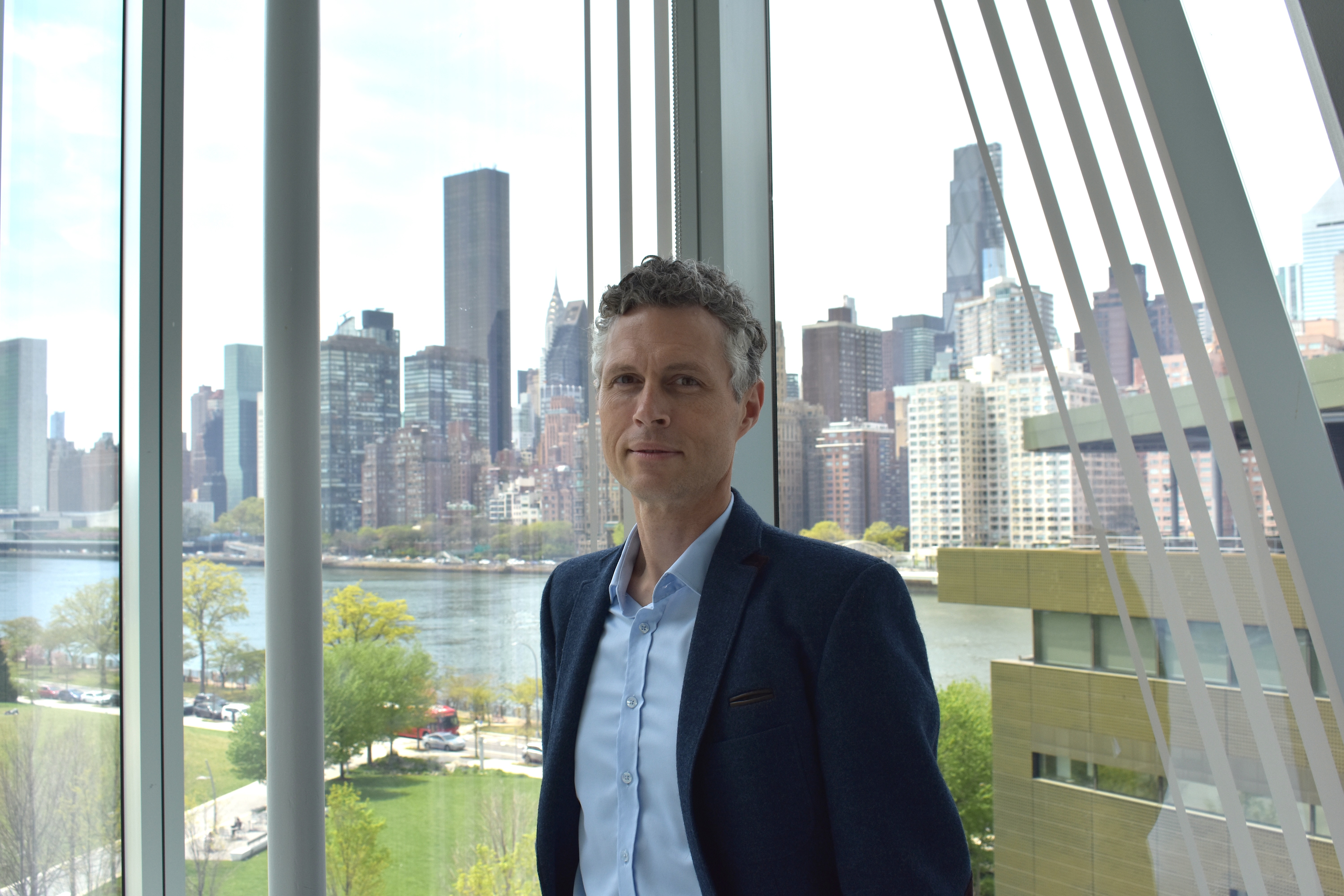
Professor, School of Electrical and Computer Engineering, Cornell University and Cornell Tech, USA.
Beyond the Benchmark: Building AI That Has an Impact
Abstract: Medical imaging AI has made extraordinary progress on curated datasets and well-defined benchmark tasks. Yet real clinical impact requires more than high performance on a held-out test set. Medical images are acquired in changing environments, embedded in complex workflows, and interpreted alongside longitudinal histories, imperfect measurements, and evolving clinical decisions.
In this talk, I will draw on examples from quantitative imaging, longitudinal analysis, and AI-assisted clinical surveillance to argue for a broader view of progress in medical imaging AI. Rather than focusing only on whether a model can recognize a pattern or match an expert annotation, we should ask whether it can produce reliable measurements, detect meaningful change over time, adapt to real-world variability, and ultimately support better decisions for patients.
I will discuss the technical and translational challenges that arise when moving beyond benchmarks - from data quality and distribution shift to uncertainty, human-AI collaboration, and continuous evaluation in practice. My central message will be a call for the MIDL community to pursue not only more capable models, but also more consequential problems and more durable pathways to impact.
Biography: Mert R. Sabuncu is a Professor of Electrical and Computer Engineering at Cornell University and Cornell Tech, with a dual appointment in Radiology at Weill Cornell Medicine, where he serves as Vice Chair of AI and Engineering Research. His research focuses on the development of machine-learning–based computational methods for biomedical imaging, spanning image acquisition, segmentation, multimodal data integration, and clinical translation.
Dr. Sabuncu received his Ph.D. in Electrical Engineering from Princeton University, where his dissertation introduced entropy-based approaches to image registration. He subsequently completed postdoctoral training at Massachusetts Institute of Technology, working with Polina Golland at the Computer Science and Artificial Intelligence Laboratory on biomedical image analysis, including brain MRI segmentation and population modeling.
He later joined the A.A. Martinos Center for Biomedical Imaging at Massachusetts General Hospital and Harvard Medical School as junior faculty, where he established an independent research program at the intersection of medical imaging, machine learning, and genetics.
Dr. Sabuncu is a recipient of the NIH Early Career Development (K) Award and the NSF CAREER Award, and he serves as Editor-in-Chief of Machine Learning for Biomedical Image Analysis (MELBA).